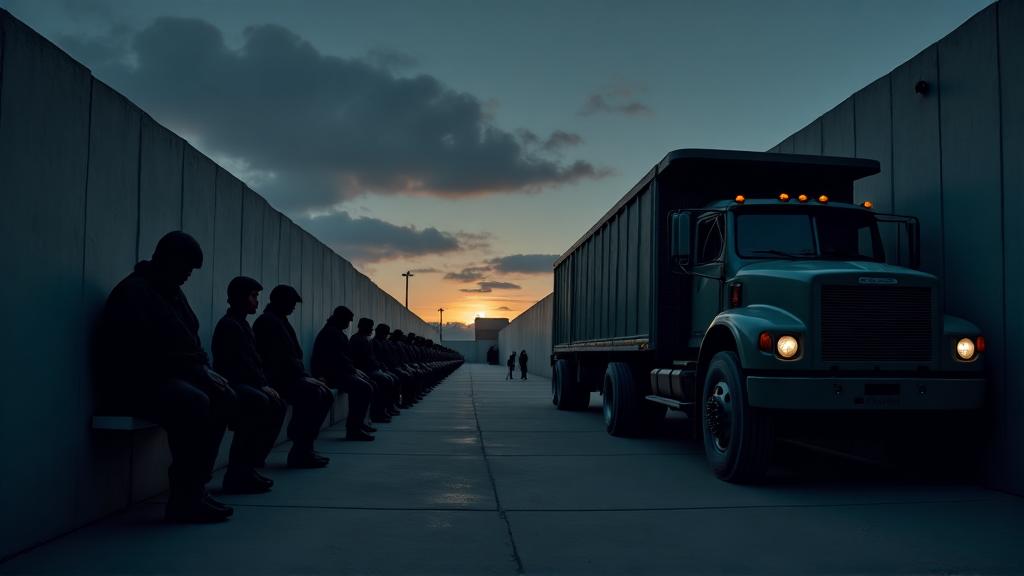
La misión de la ONU documentó 64 nuevos casos de tortura desde el 3 de enero, incluidos intubación forzada y confinamiento prolongado en cisternas subterráneas en la prisión El Rodeo I.
Entre 300 y 500 personas permanecen detenidas por razones ideológicas, a pesar de las excarcelaciones de presos políticos.
Se ha identificado un patrón de detenciones de corta duración para intimidar a activistas, opositores y periodistas después del 3 de enero.
La misión instó a Estados Unidos y a otros actores influyentes a intensificar los esfuerzos por cambios en materia de derechos humanos sin facilitar más violaciones.
Análisis disponible en inglés — traducción revisada próximamente.
Source ecology
Efecto Cocuyo · independent ve · reliability B
Independent, human rights focused — Independent digital media (Luz Mely Reyes, director)
- Smaller team limits coverage breadth
This report from Efecto Cocuyo, an independent Venezuelan digital outlet with a B reliability rating and a human rights focus, relays findings attributed to the UN Fact-Finding Mission on Venezuela. The signal is therefore second-hand: the underlying documentation comes from a UN investigative body, while the article itself is a media transmission. The claims are specific and grave—64 new torture cases since January 3, including forced intubation and prolonged confinement in underground cisterns at El Rodeo I prison; 300 to 500 people still detained for ideological reasons despite releases of political prisoners; and a pattern of short-term arrests to intimidate activists, opponents, and journalists after January 3. The source's profile suggests the claims are reported with care and alignment with human rights documentation, but its smaller team limits coverage breadth, meaning the article may not capture the full scope of the UN mission's evidence or any government response. Our own corpus has no matching record for these individual claims—0 of 24,929 claim keys cross sources as of 2026-09-13—so we cannot yet check them against other sources. That is a limit of our check, not a finding about the world.
The epistemic status of these claims is asserted rather than independently corroborated within our system. The UN Fact-Finding Mission is a credible institutional source, but the article provides no direct evidence links, and the entities named—El Rodeo I, Fuerte Guaicaipuro, Alex Neve, Macher, María Eloísa Quintero, Nicolás Maduro, and the United States—appear without elaboration on their specific roles. The pattern described, short-term arrests to intimidate, is consistent with a repressive apparatus that remains intact, as the headline suggests. However, the absence of matching records in our corpus means we cannot assess whether other sources report the same incidents. The source's independence and human rights focus imply the report is unlikely to be government-aligned, but it also means the framing may emphasize abuses without detailing government justifications or contextual factors.
What would change this assessment? The UN Fact-Finding Mission publishing a follow-up report documenting a significant decrease in torture cases or the dismantling of repressive structures, observable within 90 days via UN Human Rights Council reports, would challenge the claim that the apparatus remains intact. Similarly, the Venezuelan government announcing the closure of El Rodeo I prison or Fuerte Guaicaipuro as detention centers, observable within 90 days via government announcements, would be a direct falsifier. Until then, the claims remain asserted, not corroborated in our system, and should be read as a serious but single-source transmission of UN findings.
The claims, made testable
- asserted — check unavailable The UN mission documented 64 new torture cases since January 3, including forced intubation and prolonged confinement in underground cisterns at El Rodeo I prison. (evidence: not measured)
- asserted — check unavailable Between 300 and 500 people remain detained for ideological reasons, despite releases of political prisoners. (evidence: not measured)
- asserted — check unavailable A pattern of short-term arrests to intimidate activists, opponents, and journalists has been identified after January 3. (evidence: not measured)
Pattern: 2997 related Venezuela signals in the last 30 days on human rights, torture, political detentions, Venezuela.
What would change the assessment
- The UN Fact-Finding Mission on Venezuela publishes a follow-up report documenting a significant decrease in torture cases or the dismantling of repressive structures. (within 90 days — UN Human Rights Council reports)
- The Venezuelan government announces the closure of El Rodeo I prison or Fuerte Guaicaipuro as detention centers. (within 90 days — Venezuelan government announcements)
Grounded analysis — deterministic intelligence + AI synthesis anchored to real signals (deterministic + anchored deepseek-chat). No fact is asserted that the sources do not support.
Qué establecen las fuentes
La fuente afirma lo resumido anteriormente; VeraVadis todavía no encontró corroboración independiente en su corpus.
Actores nombrados en fuentes
Misión ONU · Alex Neve · Macher · María Eloísa Quintero
Haga clic en un actor para ver otros informes que lo mencionen.
Lo que aún no se puede ver
- Misión ONU recibió información sobre 64 nuevos casos de tortura desde el 3 de enero — Misión ONU
- Misión ONU señaló que entre 300 y 500 personas continúan detenidas por motivaciones ideológicas — Misión ONU
- Misión ONU ha identificado un patrón recurrente de arrestos de corta duración para intimidar a activistas, opositores, periodistas y otros actores tras el 3 de enero — Misión ONU
- Misión ONU denunció el confinamiento de personas en celdas similares a fosas subterráneas, así como privación de alimentos, exposición al frío y otras condiciones degradantes en Fuerte Guaicaipuro — Misión ONU
- Misión ONU documentó patrones de tortura y malos tratos contra detenidos por motivos políticos, citando casos de intubación forzada y confinamiento prolongado en cisternas subterráneas en la prisión de máxima seguridad El Rodeo I — Misión ONU
Síntesis asistida por IA anclada a una fuente real analizada por VeraVadis. Aprobada por las compuertas editoriales automáticas de VeraVadis el 2026-09-16; no la revisó un editor humano. Pieza de archivo: se publicó con nuestro método anterior. No lleva la cadena de evidencia por afirmación —quién lo publicó primero y quién reproduce a quién— que sí llevan las piezas de hoy. El enlace a la fuente y la fecha son los originales.